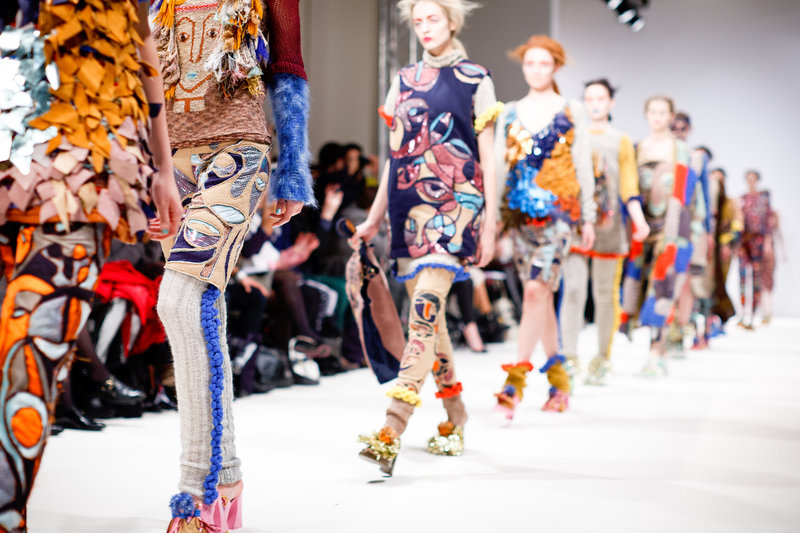
“Brand DNA” is one of those phrases that gets repeated until it becomes vague. In practice, it is not a mystical aura or a marketing slogan; it is a coherent system of recognizable choices that stay stable while products, seasons, and creative leadership evolve. Brand DNA is the set of design codes, materials, silhouettes, and cultural signals that make a house identifiable at a glance and credible over decades. When it is strong, it creates a dependable relationship between what the brand says and what the customer experiences.
In a market where attention can flick from archival runway clips to the live lightning roulette and straight back to product pages, strong brand DNA functions like a cognitive shortcut. It helps consumers decide quickly: “This feels like that house,” “this is consistent,” “this is worth the price.” The question is how such different houses maintain that kind of identity without becoming repetitive or trapped by their own past.
What “Brand DNA” Really Means
At its most useful, brand DNA has four layers.
First, visual codes: recurring shapes, proportions, motifs, and color logic that form an instantly legible signature. These can be loud or subtle, but they must be consistent enough to be learnable.
Second, material and construction habits: the textiles, leathers, hardware, stitching, and finishing details that form a tactile identity. This is where credibility is often won or lost, because it sits beyond styling and into product truth.
Third, narrative logic: the stories a brand tells about itself—heritage, modernity, rebellion, refinement—and how those stories show up consistently in casting, set design, retail environments, and even customer service.
Fourth, strategic discipline: how the brand prices, distributes, collaborates, and manages scarcity. DNA is reinforced not only by what is made, but by how it is released and protected.
With that framework, you can see why certain houses remain distinct even as trends shift. They may change the season’s mood, but they rarely abandon the underlying grammar.
Chanel: Structured Ease and Symbolic Continuity
What makes Chanel “Chanel” is not any single item; it is the disciplined repetition of a few elegantly engineered ideas.
A central code is structured ease: garments that look polished but are designed to move. Tweed-like textures, clean-edged tailoring, and refined contrasts communicate an almost architectural neatness, yet the pieces are meant to feel wearable rather than ceremonial. The house’s DNA also relies on graphic restraint—a preference for clear outlines and balanced proportions that read well from a distance.
Another pillar is symbolic continuity. The brand’s identity is reinforced through recurring elements—camellia-like florals, quilted textures, chain-inflected hardware, monochrome contrasts—that act like punctuation marks. Importantly, these elements are rarely deployed as random decoration. They are integrated into construction and function: quilting as structure, chains as strap engineering, contrast trims as framing devices. This integration is why the brand feels coherent even when the styling leans modern or nostalgic.
Using a photo collage maker, luxury brands can present iconic collections and branding elements through visually engaging layouts.
Chanel’s strategic discipline also reinforces DNA. The brand’s distribution posture and pricing confidence signal permanence. When a house behaves as though its codes are non-negotiable, consumers tend to treat those codes as canonical.
Gucci: Maximal Symbolism and the Pleasure of Remix
Gucci’s DNA is built around expressive abundance: a willingness to treat fashion as a crowded collage of references—romance, eccentricity, nostalgia, and pop culture—held together by strong symbolic anchors. While the surface may look chaotic, the underlying system is consistent: bold color, decorative density, and an unembarrassed embrace of ornament.
Two things make that work. The first is motif recognition. Gucci relies on repeatable signals—distinctive striping, monogram-like patterning, emphatic hardware language, and retro-leaning silhouettes—that can appear in many forms while still feeling “Gucci.” These are not merely aesthetics; they are identifiers that turn variability into a coherent family.
The second is remix as identity. Gucci often treats its own archive as a palette rather than a shrine. Vintage cues are re-styled, exaggerated, and recombined, allowing the house to move quickly without severing lineage. This approach aligns well with contemporary culture, which rewards quotation and reinterpretation. As long as the brand maintains its confident, decorative stance, consumers accept the evolution as part of the brand’s personality rather than a loss of direction.
Commercially, this DNA supports a wide product ecosystem. When your identity is inherently expressive, you can extend into many categories—accessories, footwear, ready-to-wear—without the customer feeling you have “lost the plot,” because the plot is the exuberant mix.
Prada: Intellectual Minimalism and Subversive Precision
Prada’s DNA is frequently misunderstood as “simple.” It is not simplicity; it is intellectual minimalism—a deliberate, sometimes challenging restraint that uses proportion, fabrication, and context to create tension. Prada’s signature is a kind of subversive precision: clean lines that are slightly off-kilter, utilitarian cues sharpened into luxury, classic shapes disrupted by unexpected details.
A key code is material intelligence. Prada often uses textiles that carry a technical or industrial feeling—nylon-like surfaces, crisp cottons, firm leathers—then elevates them through immaculate construction and controlled styling. This creates a specific emotional effect: modern, practical, and faintly provocative, as if the wearer is choosing function as an aesthetic stance.
Prada’s narrative logic also differs. Where some houses sell romance or heritage warmth, Prada often sells thoughtfulness—a sense that clothing can be conceptually interesting. This is reinforced through stark environments, editorial casting, and a preference for designs that reveal themselves over time rather than seducing immediately. That slower-burn appeal becomes a commercial advantage with a certain audience: people who want their wardrobe to signal discernment rather than spectacle.
Why These Three Remain Distinct in a Converging Market
Modern fashion tends to converge. Streetwear influences luxury; luxury influences streetwear; digital platforms compress trends into fast cycles. Yet these three houses remain distinct because their DNA operates at multiple levels simultaneously.
- Their visual codes are recognizable without being frozen.
- Their materials and construction habits make the product feel credible, not just styled.
- Their narratives are consistent enough to be believable, but flexible enough to evolve.
- Their strategic discipline protects the perception of value.
In other words, “Chanel,” “Gucci,” and “Prada” are not just names; they are systems. Each has a repeatable set of design decisions that can be applied to new ideas without dissolving identity. That is what strong brand DNA looks like: not sameness, but continuity under pressure.